Minimalist design with personal touches
Minimalism keeps a room simple, but it doesn't have to feel bare. Here are the principles behind the style, and how to add character with prints without losing the calm.
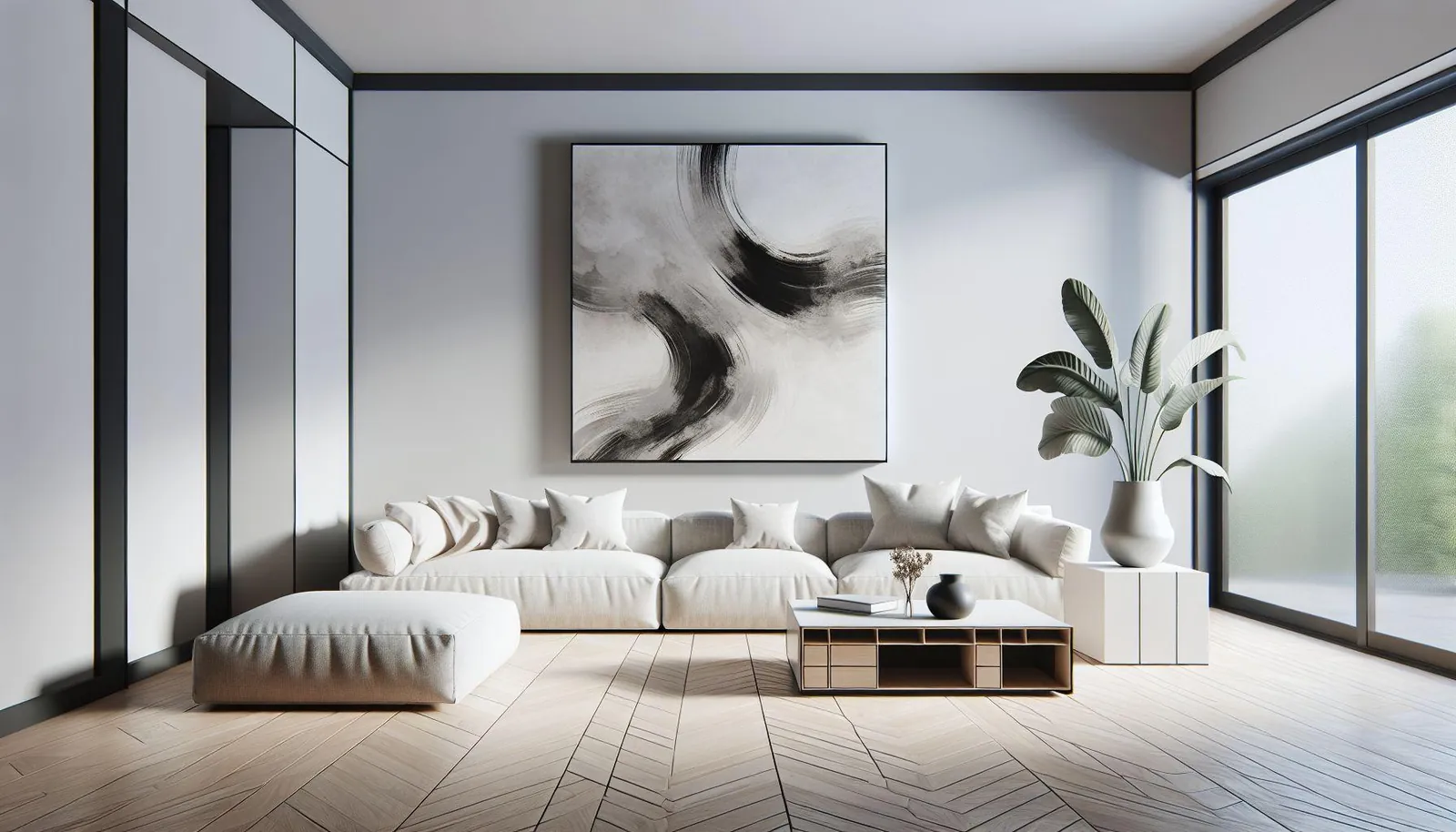
Minimalist interior design has become increasingly popular, especially in city apartments where space is tight. Minimalism grew out of the art movement of the 1960s and puts simplicity and function first.1,2 It strips away what you don't need and keeps only the essentials. The result is a calm, uncluttered home that feels peaceful.
But minimalism doesn't mean a lack of personality. Carefully chosen prints can add character and warmth to these spaces. A print can act as a focal point, drawing the eye and adding a touch of individuality without overwhelming the room's simplicity. A single bold abstract print on a white wall, for example, can turn a stark room into a sophisticated one.
The principles of minimalist design
Minimalist design rests on three main principles: simplicity, functionality and neutral colours.
Simplicity
Minimalism is about keeping things simple. That means removing what you don't need and focusing on what matters. In a city apartment, it could mean multi-functional furniture, such as a sofa that doubles as a bed or a coffee table with hidden storage. The aim is a space that is both beautiful and practical.
Functionality
Every item in a minimalist space should serve a purpose. That doesn't mean giving up style for practicality, but finding a balance between the two. A sleek, modern chair, for example, can be both comfortable and good to look at. In a minimalist apartment you won't find items that are purely decorative; everything has a function.
Neutral colours
Neutral colours such as white, beige and grey are staples of minimalist design. They create a calm setting and make rooms feel larger and more open. A minimalist space doesn't have to be colourless, though. Carefully chosen prints can add pops of colour, bringing interest and personality without overwhelming the room.
Applied to a city apartment, these principles make for a calm, uncluttered home. So where do prints fit in?
Tips for incorporating prints in minimalist spaces
If you want to add prints to your own minimalist space, these practical tips will help you get started.
Choose the right size
Size matters in a minimalist room. A large print can serve as a focal point, while smaller prints can be grouped into a gallery wall. Pick a size that suits the room and everything else in it.
Select the right type of print
Think about the overall look of your space. Abstract prints add a modern touch, and nature-inspired prints bring a sense of calm. Geometric prints add visual interest without overwhelming the room.
Think about placement
Placement is crucial in a minimalist space. A single large print can create a focal point, while a series of smaller prints can be hung in a grid or as a gallery wall. Make sure the arrangement works with the rest of the room and doesn't look cluttered.
Balance prints with other design elements
Weigh your prints against the rest of the room: the colour palette, the furniture and other decor. They should suit the overall look, not overwhelm it.
Follow these tips and prints can add character and warmth to a minimalist space without giving up its simplicity.
Sources
Show all 2 sourcesHide sources
- Tate. "Minimalism." Art term. Viewed Oct. 23, 2026. www.tate.org.uk/art/art-terms/m/minimalism
- Wikipedia. "Minimalism." Viewed Oct. 23, 2026. en.wikipedia.org/wiki/Minimalism
Update log
- First published.